Friday, July 31, 2015

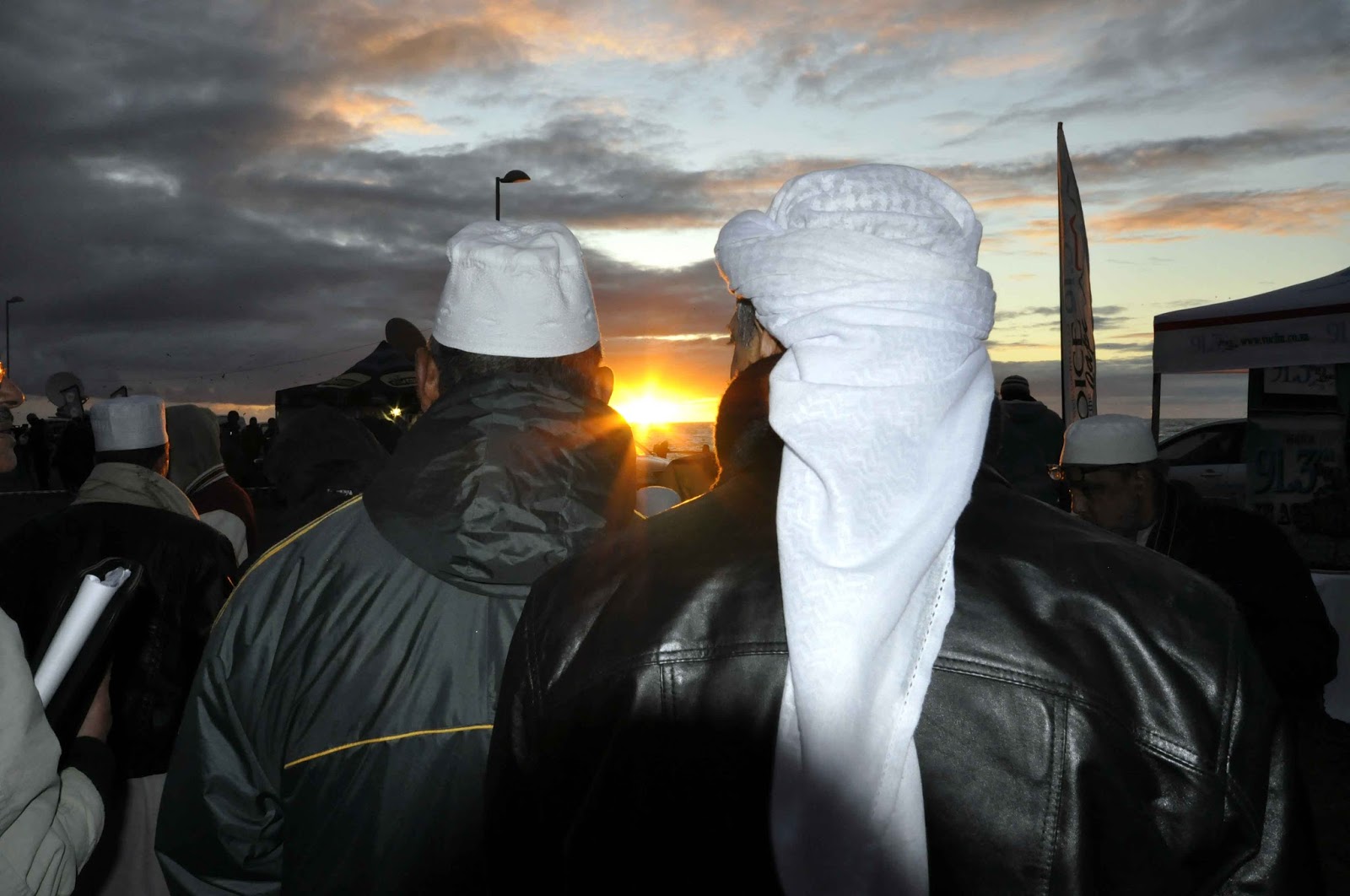
District Six moods, Cape Town


Photos copyright Shafiq Morton

Friday, July 17, 2015

Ramadan, picking the fruits

THE Qur’an is many things to many people. It is a tapestry of injunctions, prophetic history and natural wonder; it invokes Heaven and conjures up Hell; it indulges in masterful transitions. Not of literature, not of poetry and not of prose, the Qur’an is matchless.

It leads us on a journey from Surat ul-Fatihah, its opening chapter, to the final whisperings in Surat un-Nas after over 6,000 verses. Unchanged since its first uttering over 1,400 years ago, the Qur’an is the most unique text on earth.

Sublime does not begin to explain it. Qur’an can depict a galaxy in one single letter, or take a whole chapter for a universe. And every Ramadan as I dive into the Qur’an’s infinite depths, I never cease to be amazed. It is, as a famous Sufi once observed, a “Mercy Ocean”.

But also, I think Qur’an talks to us. It talks to our eyes when we scan its letters; it talks to our ears when we recite – and when we recite, the sounds resonate within each cell of our body. The Qur’an is, indubitably, a dialogue of the heart.

My interest in Qur’an, as a media practitioner, is how exactly it talks to us. The message and the medium is my daily bread, and the Qur’an is a premium message bearer, or the ultimate “Criterion”, as Allah the Highest reminds us.

And each Ramadan the Qur’an lays at our table its sweet fruits, its tastes, its textures and its tangible truths. This year my journey took me to place I’d never been before: the villains of Revelation. This was when I’d noticed how few historically bad personalities have been explicitly mentioned in its verses.

For this reason, the list of villains is not long, each representing an archetype: Iblis (who refused to prostrate to Adam), Samiri (of the golden calf) and Qarun (the wealthy Israelite swallowed by the earth). Then we have Haman (the Pharaoh’s lieutenant), Azar the idol maker, Abu Lahab and Jalut (slain by Nabi Dawud).

But the most powerful figure of all, one that towers in the text is the Fir’aun, the Pharaoh of Musa [as]. An epitome of oppressive and arrogant rule, I found his wrathful personality jumping off the page.

He was so pompous that he deigned himself divine, and indulged in unspeakable cruelty – such as chopping off the hand and foot of anyone who got in his way. The infanticide of Israelite boys is, of course, his signature atrocity.

The Fir’aun was the kind of man whose stare could chill you to the bone. That is why in Surah Ta-Ha, Musa [as] – usually plucky by nature – tells Allah when sent with Harun [as] to deliver a message to the Fir’aun, that he fears his transgressions.

It is one of the Qur’an’s most poignant moments. Allah, the Highest, calmly instructs Musa and Harun [as] to approach the Pharaoh – a man to all intents and purposes beyond redemption – with “gentle” speech in the hope that he might succumb to His Mercy. “I am with you both,” promises Allah.

The Pharaoh’s ultimate fate – to be “mummified” in abject humiliation as an unbeliever after he cynically recited that God was One to save himself from drowning – is a timeless metaphor.

This Ramadan my fruit from the orchard of the Qur’an is the fact that evil oppressors will be held accountable, whether they are ISIS emirs, or whether they are lording it in Palestine, Syria, Myanmar or Saudi Arabia. The scales of justice will weigh against them in exactly the same way they did against the Pharaoh, a man who dared to think he was god.

Thursday, July 16, 2015

Moonsighting, Cape Town, Ramadan 2015


In spite of the bitter cold and rain squalls coming from the Atlantic, over 1,000 people attended the traditional moon sighting for the end of Ramadan at Three Anchor Bay in Cape Town. Crescent Observer Society Hakim, Shaikh Seraj Hendricks (second pic below), announced that the crescent had not been sighted with 'Eid ul-Fitr, the end of Ramadan celebration, taking place on 18 June.


© Shafiq Morton Photos 2015

Sunday, June 28, 2015

Islam in China: a tale of two minorities and Ilham Tohti


“SEEK knowledge, even unto China” go the words in a famous Hadith. And whilst some academics may regard this Prophetic tradition as weak, its import has real consequences. 

This is because Muslims first landed in China less than 20 years after the demise of the Prophet Muhammad. Records show that from 651-798 CE, some 39 “Arab envoys” were received by the dynastic Emperors in China.  

It is believed that Ibn Waqqas was the first Companion to travel to China, and that his grave lies in Guangzhou in the south. The oldest mosque in China, constructed in traditional pagoda style, is in Xian and was built 1,273 years ago. In fact, Islam was prevalent in China long before much of the Arab world. The Silk Route, part of which travelled over China, became the crossroads of faith and culture.

For that reason China’s early rulers were tolerant of diversity. The Ming Dynasty of the 14th century, which entertained expansionist impulses not unlike today, sent Admiral Xengh He to explore the world and to bring business to China. Xengh He, probably the finest maritime explorer of all time (who circumvented the Cape long before Bartolameu Dias) was a Muslim, a Hajji and a eunuch of great girth and height.

In 21st century China there are 20 million Muslims and some 30,000 mosques. Islam in China is a tale of two significant minorities – but one with two distinct, contrasting tales. The groups are the Hui (who originate from Ningxia in central China) and the Uyghurs (from Xinjiang in the west) a mountainous region.

The Hui, who speak Chinese, are a community going back to the earliest centuries of Islam. They have Arabic, Persian, Asian and Mongol DNA and constitute about half of China’s Muslims. The Hui have also moved to Gansu, Qinghai, Mongolia, and the northern Chinese provinces as far as Tibet.

Islam is said to have been introduced to the Uyghurs from the 10th century onwards. The Uyghurs, Turkmen who are not ethnically Chinese, claim to be the original inhabitants of Xinjiang. Their home language is not Chinese.

During the Cultural Revolution of the 1960s and 1970s the Hui Muslims were severely persecuted by Mao Zedong. In those days – when religious belief was seen as being anti-state – just the ownership of a Qur’an could result in the death penalty.  

However, in 1979 the Chinese politburo started to relax its rigidity on religious practice and endorsed five faiths: Buddhism, Taoism, Islam, Catholicism, and Protestantism.

This led to a constitutional change, Article 36 of 1982 stating that citizens of the People's Republic of China had a right to enjoy freedom of religious belief. This was, nonetheless, qualified by government insisting that it had to protect what it defined as “normal religious activities”.

Since then the constitution has been applied unevenly. China is, after all, an authoritarian one-party state with a deplorable human rights record. Tibetan Buddhism, for instance, is still not recognised; the Falun Gong (a spiritual, non-political movement) has been banned completely, its members imprisoned – and according to some sources – used to bolster China’s transplant market.

Even Christianity has felt the heat. Human Rights Watch reports that in 2013, authorities removed 150 crosses from churches in the Zhejiang province, and that China has not responded to Pope Francis’ wish to normalise relations. 

For the Uyghurs, it has been a battle for survival under extremely repressive conditions. The Hui, on the other hand, who are more of a merchant class, have assimilated fairly successfully into the broader, Han-dominated society. 

Unlike the Uyghurs, the Hui are free to wear the hijab, to grow beards, to fast in Ramadan, to construct mosques and to attend mass ‘Eid prayers. The Hui, who speak Chinese, are by definition Chinese and Muslim – whilst the Uyghurs who have their own Turkic language, do not see themselves the same way. They are Uyghurs and Muslim, not Chinese and Uyghur. This is what alarms Beijing so much – Uyghur notions of ethnic and national separatism.

The Chinese government’s response has been to squash any notion of Uyghur identity, or thoughts of an East Turkmenistan. For not only have they flooded the Xinjiang region with Han migrations (thus creating ethnic tensions), but they’ve also adopted the expedient excuse of using the “War on Terror” to crush the cultural marrow out of Uyghur bones.

It’s a political game, first and foremost, although (as we’ve said) Beijing conveniently hides behind the skirts of Islamic terror. The point is if the Uyghurs were Christian or Buddhist, they would probably be treated in exactly the same way. But that does not diminish the abuse of human rights in Xinjiang where long beards have been banned, as have veils, hijabs, and t-shirts with the Islamic crescent moon and star – and where during the month of Ramadan, fasting is banned for state employees. 

The nature of the Beijing’s Uyghur crackdown – which was intensified in 2014 – is draconian in the extreme. Late last year the academic Ilham Tohti was jailed for life on the ill-defined charge of “separatism”. 

Amnesty International described his trial and sentence as an “affront to justice”, adding that before the trial he’d been tortured, denied food for 10 days and shackled for nearly three weeks. In addition, his legal team had been denied access to him for six months, his first legal representative being pressured to step down.

Tohti, a peace activist, had been campaigning for better relations between the Uyghur population in Xinjiang and the ruling Han. He had started the website Uyghur Online and had written extensively on human rights, daring to criticise Beijing. 

It is sad, if not ironic, that nobody in the Muslim community – let alone the broader one – knows who Ilham Tohti is. Well, let’s say it: Ilham Tohti is a prisoner of conscience.  Ilham Tohti might have been caged by the Chinese oligarchs for now, but if we have any sense of justice, he will not be forgotten.

Wednesday, June 10, 2015

ISIS and slavery: a state of “Islam” before the Qur’an

Amsha Alyas, who escaped ISIS after her husband was killed.
She was sold to an ISIS commander.
Mashable.com

TWO-hundred and twenty-one years ago the Portuguese slave ship, the Sao Jose de Africa, set sail from Sofala in Mozambique with a cargo of 400 slaves. Captured in the Zambesi lowlands, the live cargo was destined for the markets of Brazil.

In 1794 the idea of transporting east African slaves across the Atlantic marked a significant shift in the brutal industry, a shift that would prolong slave trading between Africa and Brazil until 1865 – and see nearly half a million Mozambicans dispatched to the country’s sugar plantations.  

After having rounded Cape Point in late December, the Sao Jose hugged the coastline to avoid a storm and struck a rock off modern-day Clifton. It broke up and sank in shallow water about 200 metres offshore. Tragically, 212 of the slaves were drowned in the icy Atlantic after the crew were unable to rescue them.

The remaining 200, who’d survived the terrifying ordeal, were herded together on the beach and sold in Cape Town. One can only imagine their trauma: the lot of slaves at the Cape makes for miserable reading. Slavery was grossly exploitative, cruel and contrary to any concept of human dignity.

With our slave origins in Cape Town this is something that as South Africans we should be painfully aware of. In the 21st century being free from slavery is an entrenched human right – which makes it surprising that any modern nation state – let alone a “Caliphate” – should endorse it.

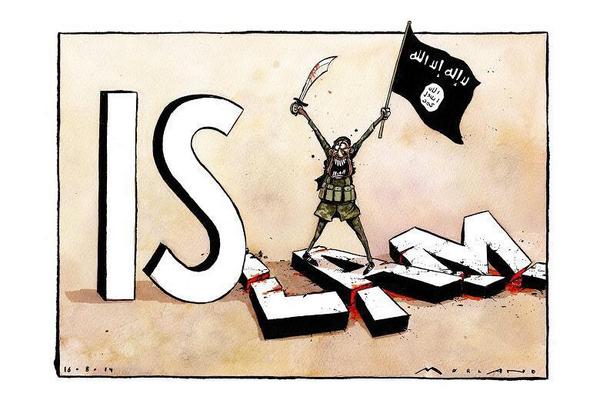
Yet ISIS in 2014, enforcing its Islamic “state” at the point of a Salafi-Wahhabi gun, had issued a document, via its Research and Fatwa Department, which – astoundingly – endorsed the slavery and sexual subjugation of Yazidi, Christian and Jewish women due to them being regarded as kuffar, or people of unbelief.

Questions of their “unbelief” are, of course, questionable. But that Yazidi women had indeed been enslaved by ISIS was confirmed by Human Rights Watch and Bristol University, who spoke to women who’d escaped the clutches of their rapacious captors. The BBC ran with the story and Al-Jazeera reported that girls were being sold in Mosul.

For any Muslim, this bizarre retrogression by ISIS is as baffling as its understanding of Shari’ah. Tahir ibn Ashur, the famous Tunisian scholar, once said that the maqasid (the noble goals of Sacred Law) indicated that equality was one of its objectives. Shaikh bin Bayya, a legal giant of contemporary Islam, has said the maqasid emphasises that freedom is an essential human right.

With ISIS hankering for a rose-tinted return to the past – and specifically the era of the pious forbears, the Salaf us-Salihin – one can only assume that their literalist reading of the texts has let them down again.

Slavery was indeed the status-quo of the Quraish who ruled Makkah at the time of the Prophet, but to say that he approved of slavery would be mistaken. Islamic scholars observe that the Qur’an, which Muslims believe has the final say on such things, is a thoroughly pragmatic work. This is because the Qur’an recognised that deeply embedded cultural institutions, such as slavery, could not be eliminated instantly with the sweep of a single verse.

The great elders of Qur’anic exegisis – or interpretation – tell us that Qur’anic verses have special qualities of meaning such as “specific” and “general”. They also have qualities of abrogation (naskh): in other words, one verse can out-rule another.

The abolition of intoxicants is a good example, and shows how the Prophet used gradualism to spread his word, rather than harsh reactivism. For instance, 2: 219 posits the undesirability of alcohol, but does not abolish it. In 4: 43 we get the suggestion not to come to prayer when intoxicated. Only in 5: 90 is alcohol completely forbidden.

For literalists like the Salafis, some of whom who spurn classical methodology and metaphor, there are obvious contradictions when it comes to intoxicants and prayer. On the issue of slavery it appears as they’ve reverted back to the default position – a state of Islam before the Qur’an – when slavery was accepted as an unquestioned status-quo.

The point is that Qur’an questions the institution of slavery from the get-go. However, the word of Allah is subtle, it realises that turning a society upside down short-term will not result in long-term reform. So what we get this time is a thematic thread weaving through the Holy Book from its second chapter right to the end.

In 2: 177 we are told that to free a slave is a practical deed of charity; in 4: 92 freeing a slave becomes an act of restitution for the mistaken killing of another Muslim; in 5: 89 freeing a slave is expiation for a false oath; in 9: 60 there is a reminder of the charitable act of freeing a slave; in 58: 3-4 expiation emerges again and in 90: 13 man is reminded that one of the most noble signs of justice is freeing a slave.

The Hadith of the Prophet also show that freeing slaves was a popular means of expiation. That the freedom of one slave could be equal to months of fasting – and even the feeding of 60 poor people – is an eloquent enough suggestion of its charitable merits.

A ruling, via Qur’an, that a slave woman would only receive half the legal punishment of a non-slave woman, that a portion of zakat (alms tax) should go towards freed slaves and the order (in 24: 33) for masters to help their freedman financially, is proof of a compassion towards slaves that did not exist historically before.

Unfortunately, reports from Iraq and Syria appear to contradict all of the above with regards to ISIS. Their evident return to an era of darkness and ignorance is inexplicable given the overwhelming body of scriptural evidence against reverting to slavery, and the fact that the Prophet was essentially an abolitionist, a man who believed that liberating a slave was like bringing a human being back to life.

Monday, May 25, 2015

ISIS is calling


THE notion that the Islamic State (ISIS), or Da’ish, would not extend its reach to South Africa has proved a false one. ISIS, which controls swathes of Iraq and Syria, has persuaded thousands of gullible youths from all over the Muslim world to migrate to its self-declared Caliphate.

This breakaway group from Al-Qa’idah has turned Islamic extremism on its head. Unlike Al-Qa’idah, which has focused on a “distant enemy” from caves and compounds, ISIS controls actual territory and has an active militia.

And whilst Sunni scholars world-wide have condemned ISIS for its heartless parody of Shari’ah, or Sacred Law, and its notion of an “Islamic State”, it has not prevented it from becoming an ideological reality bolstered by extensive social media support.

Its online magazine, Dabiq, presents a glowing depiction of jihadist utopia. But the gloss disappears when the Caliph urges Muslims to rise up and kill “crusaders” (Christians and Jews).

Essentially, ISIS’ message is that Islam is under threat everywhere; the world is a Dar ul-Harb, a place of hostility, and ISIS offers the only Dar us-Salam, or refuge. “If you don’t agree with us, you’re against us” is the gist of the worldview, which means that as a Muslim if you disagree with ISIS you become a kafir – an unbeliever whose blood, in their eyes, it is permissible to spill.

ISIS also promotes an apocalyptic vision of Syria, and claims that it is waiting for the end days and the final Islamic Armageddon when a leader, the Imam Mahdi, will appear.

ISIS rose after 2003 – and the US invasion of Iraq – as an Al-Qa’idah affiliate led by Abu Musab Al-Zarqawi. He was a Jordanian jihadist with a criminal record, who refused to swear allegiance to Usama Bin Laden, and whose brutality even stunned Al-Qa’idah.

The rot was started by the Bush administration when Paul Bremer, the US presidential aide in Iraq, fired 250, 000 civil servants and government forces. Bush’s incompetence in then imprisoning many Iraqi officials created a political sinkhole into which the whole region collapsed as Iraq disintegrated.

Interestingly, General David Petraeus – who was sent to Iraq in 2007 as “Mr Fixit” – told the Assad regime that its sponsorship of a Salafi insurgency to undermine the US would come back to haunt it. Nouri al-Maliki’s government (2006-14) caused further resentment when he condoned Shi’ah sectarian patronage and allowed political neglect of the Sunnis.

It is more than anecdotal, reports the German magazine Der Spiegel, that the structure of ISIS was developed by a bitter, unemployed ex-Baathist intelligence officer, Colonel Samir al-Khlifawi.  Like so many Iraqis, he’d been quietly waiting to seize the day.

However, post-analysis does not serve present realities in South Africa. This is because although ISIS does have a decidedly limited appeal here, a few South Africans have been seduced by its propaganda and have travelled to Syria either to fight with it, or to migrate permanently.

In recent months, swirling speculation and rumour has coalesced into fact. In South Africa, ISIS is calling.

The first instance was earlier this year when the Daily Maverick interviewed via social media an “Abu Hurayra” from Gauteng, who claimed to be fighting with ISIS, saying that another South African “Abu Baraa” was with him.

Last month a teenage girl from Kenwyn was apprehended at Cape Town International airport whilst en-route to Syria. Hailing from a middle-class home, it emerged that she had been active vis-a-vis ISIS in social media. Someone who knew the family described her as intelligent, focused and difficult to dissuade.

With the family closing ranks, it has been a tough lead to follow. In addition, state security has either been unable – or unwilling – to explain to the media who gave the girl, a minor, guardian’s consent to board the plane. It is a missing link in the narrative. The question is: who was her handler?

A Spanish journalist following the story, Jaime Velazquez, believes that part of the answer might lie at school, but that doors have closed there too on the possibility of an educator playing a role.

In May the Roshnee community near Johannesburg was rocked by the revelation that more than 20 of its members had left for Syria. Eleven were arrested by the Turkish authorities and deported, but the rest reportedly got through.

A meeting expressing public concern was attended by over a thousand people at a Roshnee mosque and was addressed by local scholars, who explained to the congregants the theological pitfalls of the Caliphate.

Shortly afterwards, the Lenasia-based radio station Channel Islam International (Cii) received a letter, allegedly penned by South Africans with ISIS, criticising the scholars and telling them “to see for themselves” and not to believe the western media.

Close on the heels of the first letter, Cii published on its website an e-mail from a Rashid Moosagie, believed to have been from Port Elizabeth, and a member of another group that had reportedly migrated to Syria and the “promised land”.

In a rambling diatribe against what he perceived as reprehensible, polytheistic Indo-Pak Islamic culturalism, the author claimed that South African Muslims were apologetic capitulators, and that most local groups – including the spiritually inclined Sufis and the “Tablighis” who propagate faith to fellow Muslims – were practising unbelief.

At the time of writing, various role players in the community were scrambling to formulate a united and coherent response to South Africans being recruited by ISIS, one of the most brutal, the most unforgiving and the most distressing versions of extremism to ever hit our shores.


Sunday, May 17, 2015

Undercover Muslim exposed


WITH Yemen in the news for arguably the all the wrong reasons, Theo Padnos' book, Undercover Muslim, a Journey into Yemen, takes on a whole new significance.

Published in 2011, just about the time US-Yemeni extremist Anwar Awlaki was vaporised by a drone, Padnos (formerly Peter Theo Curtis) takes us on a richly layered and personal tour into the heart of the real Yemen and its face of Salafism.

Almost no-one has succeeded in a first-hand English narrative account of the Salafi universe in the Arab world, one tempered by the austere, reductionist and extreme credo of the discredited Saudi scholar, Ibn Abd ul-Wahhab.

The story begins when Padnos, tutoring the inmates of a Vermont prison in poetry, shows them a YouTube video of John (Suleiman) Walker Lindh, the American Talib. This kindles in him the idea of seeking out the John Walker Lindh’s of the Muslim world.

He travels to Sana’a and as an English teacher, is able to get a job at a local government funded newspaper, the Yemen Times. His plan: instead of “wandering around in amidst religious feelings I could not understand” to learn Arabic and to study Islam.

Almost in the style of Richard Burton and others, who buried themselves in Muslim characters to avoid detection on their 19th century travels, Padnos “embraces Islam” and takers on the name, Thabit. He enters a madrasah where he encounters a community of youths seeking out their Islamic utopia.

There he meets “brothers” from Nigeria, France and England, and in the intimate living space of the madrasah, is quickly exposed to their idiosyncracies – and weaknesses.

An expedition with his friends in the upmarket sector of Sana’a looking for halal chicken (in a halal-friendly 99% Muslim country) becomes an understated, if not tragically side-splitting commentary on the kind of extremism that can so bedevil the Muslim world.

In another instance, his friend Said – inflamed with the Salafi notion that all images are forbidden – tears up an election poster of President Abdullah Saleh. In a matter of seconds both find themselves arrested and flung into jail.

On his release from prison, Padnos discovers that he’s passed some kind of credibility test. With his Thabit persona and the tribal acclamation of “Bani Mattari” (a kind of qat he used to occasionally chew) he could now travel to a madrasah in the town of Dammaj to the north. Dammaj had become a Salafi hub in the Zaidi-Shi’ah Houthi region.

With the Salafis regarding the Shi’ah as unbelievers, and the Houthis perceiving the Salafis as an ideological pestilence, their mutual antagonism was easy to understand. Funded by the petro-crat Saudis the Dammaj community was luring thousands of people from all over the world.

Padnos meets Jawad from Islington, a 14-year old banished to the Yemeni desert by his Yemeni refugee mother in England. Jawad had been dispatched to the “homeland” to quell his delinquent fires, but his adventurism and urban survival instincts are very much in evidence. 

Whilst Undercover Muslim is a personal journey, the author doesn’t intrude. Padnos allows his surroundings and his characters to tell the tale. Five years after Padnos’ departure from Dammaj, the Houthis would chase the Salafis out of town. And in another turn of irony, Padnos would be captured by Jabhat an-Nusra in Syria and held for six-months before being released.  

Although written in 2006, Undercover Muslim, a Journey into Yemen, is still very much a recommended read for those trying to understand why things in Islam are sometimes the way they are.

Undercover Muslim, a Journey into Yemen is published by Random House, London.