Tuesday, November 5, 2013

Robben Island: Springboard for Mid-East peace?

Marwaan Barghouti:
Courtesy Al-Ahram
SINCE the Arab Spring, the Middle-East and North Africa have experienced tectonic political shifts. From Tunis to Sana people lost their fear and gathered in mass protest to shake off the rule of their long-standing despots.

Tunisia's Ben Ali left in a hurry for Saudi Arabia, his plane loaded with gold bars. Egypt's Hosni Mubarak was forced to step down. Bashar al-Asad turned his guns upon the Syrian people.

Libya's Muammar Gadaffi was bombed by NATO and murdered by rebels, and after a protracted stand-off, Yemen's Abdullah Salih left office. However, in Bahrain Prince Hamad clung to power with the help of Saudi Arabia.

To say that the North African-Levant axis will never be the same is historical understatement. Every nation in it has felt the aftershocks of the Arab Spring. And whilst countries like Tunisia are working through their challenges, others such as Egypt are not doing well. 

Neighbouring countries have also been drawn in. Due to the Syrian crisis, Turkey, Jordan and Lebanon have had to deal with the Middle East's worst refugee crisis since the Mongol hordes.

On the political front, Iran has supported the Asad regime, ironically the only Syrian leadership the modern west has known. Beset by sectarian violence, Iraq's woes have boiled over into Syria and Syria has spilt over into Lebanon.

It's no wonder that Israel - the bĂȘte noire of the Arab world - has kept quiet in the eye of the storm. Instead of bombing Tehran as it has wished, the Israeli air-force has only ventured from its bases to bomb Syrian convoys.

But in spite of a low profile, Israel has been on edge. Disquiet about the future of the Camp David Accords and the security of its longest border with Egypt might have been assuaged by the military taking charge - yet, given the current volatility of Egypt - not much is guaranteed.

The Palestinian question has also been affected. Hamas' condemnation of the Syrian regime has forced it to relocate its headquarters from Damascus to Doha, costing it funding and support from the Persian nexus.

On the ground in the West Bank and Gaza, there has been frustration. Talks about the revival of the peace process have only meant more illegal settlement building, and further land dispossession. The release of 26 Palestinian political prisoners last week (as part of the peace deal) was blighted by 20 more detentions, including three members of parliament.

It is against this background that South Africa has played a significant role in the fate of Palestine's sovereign future.

The recent launching of the "Free Marwaan Barghouti and Other Palestinian Prisoners" campaign at Robben Island draws much from the anti-apartheid movement that coalesced around the figure of Nelson Mandela.

Organisers believe that with the endorsement of Ahmed Kathrada and Archbishop Desmond Tutu, publicity can be generated about the plight of Palestinian political prisoners. Since 1967, just over 800,000 Palestinians have been detained on political grounds, their conditions of incarceration violating international law.

The choice of the 54 year old Barghouti as the figurehead of the campaign to free the current 5, 000 Palestinian political detainees is a predictable one. He is, by far, the most influential and widely known Palestinian political prisoner today.

A charismatic figure of the 1987 and 2000 intifadahs, Barghouti joined Fatah (the resistance movement founded by Yasser 'Arafat in 1965) when he was 15 years old. He has spent 20 years of his life in Israeli jails, and since 2004 has been serving five life sentences plus 40 years for his alleged role in suicide bombings and the killings of Israelis.

A key Fatah figure, Barghouti was an outspoken advocate of the 1993 Oslo Accords determining an independent Palestinian state, and according to journalist Gideon Levy as a fluent Hebrew speaker, once had the telephone numbers of half the Israeli Knesset.

His disillusionment was fostered by Israeli violation of the Accords when settlement building (meant to have been frozen) was intensified. Like 'Arafat, Barghouti felt that Oslo died with the assassination of Israeli leader, Yitzhak Rabin, in November 1995.

In 1996 Barghouti openly challenged Fatah leadership on issues of corruption and nepotism. But it was as leader of Tanzim, Fatah's military wing, that Barghouti gained notoriety amongst Israelis.

He was arrested in 2002 after he was abducted from the West Bank (a violation of the Geneva Convention) and tried in Israel (another violation). Barghouti refused to defend himself. Without a defence counsel he was acquitted on 21 charges, but found guilty of three.

For many Israelis, Barghouti is a terrorist who should stay behind bars forever. Human Rights activists argue that if Barghouti, a resistance leader, is guilty of murder then for the law not to be an ass, Israeli leaders should face exactly the same charges.

They point out that if justice in Israel were to be equitably applied then Ariel Sharon should have been in prison for the Qibya massacre, and Menachem Begin should have been tried for the murder of 91 people in the King David Hotel blast.

Records show that Barghouti has only called for military aggression against military occupation in the West Bank and Gaza. He has denounced the targeting of civilians inside Israel "our future neighbour" but has reserved the right to resist occupation (allowed by international law).

In 2006 Barghouti was the leading hand in the Prisoner's Document, an 18-point manifesto agreed to by all Palestinian factions calling for - amongst other things - a return to the 1967 borders.

Ahmed Kathrada, who served 26 years in apartheid jails himself, is adamant that the unconditional release of political prisoners is the most powerful message an enemy of yesterday can give to its future partners in peace.

Addressing guests at the launch on Robben Island, Kathrada said that humanity had a "sacred duty" to campaign for the release of Marwan Barghouti and all Palestinian prisoners as an essential step towards stability and freedom in the region.

And for those actively seeking a peaceful and lasting solution to the Middle East's biggest crisis in a sea of popular uprisings, there is a feeling that they may just have the man in Marwan Barghouti, currently the only credible unifying force in the Palestinian house.


Thursday, October 24, 2013

Pakistan in pictures

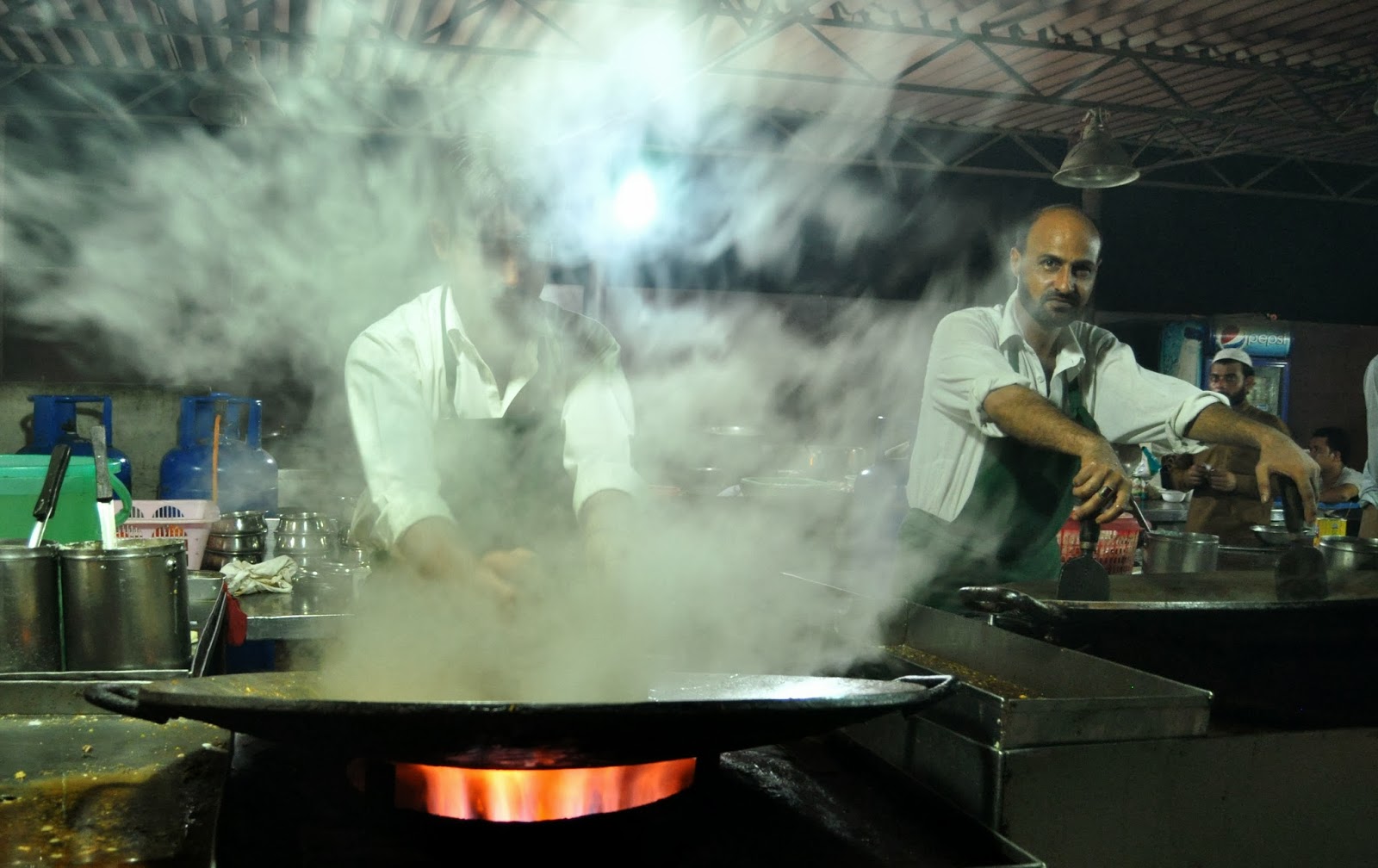
Pakistan is a country of endless fascination far beyond the Taliban and match-fixing stereotypes so commonly associated with it in the mainstream. Colourful, vibrant and industrious, the real people of Pakistan have had to face natural disasters, religious extremism, conflict and political uncertainty. But behind all that is a warm, hospitable and welcoming country. These images were taken over two visits to various parts of the country. These are some of my favourite textures

 
Copyright Shafiq Morton


.


Wednesday, October 9, 2013

Pakistan: ready to do business with South Africa


A detail of Pakistan's colourful truck art.
© Shafiq Morton
PAKISTAN is a south-east Asian country of 200 million people. It faces the Arab Sea and is sandwiched between India to the west, the ice-capped Hindu Kush to the north and Afghanistan and Iran to the east.

Flowing over 3,000 kilometres through the centre of the country is the Indus River, Pakistan’s socio-economic lifeline. It is the cradle of an ancient valley civilisation whose writing still has to be deciphered, but whose cultural legacy stretches back to at least 5,000 years.


When I’d last visited Pakistan in 2010, the Indus had overflowed its banks in one of its biggest floods in living memory, the water moving 50 kilometres inland at a height of over one metre.


This time I was a guest of the Trade Development Association of Pakistan (the TDAP), who were hosting their 8th annual trade expo in Karachi, the country’s bustling economic hub and coastal city of 16 million.


Since its 1947 partition from India, Pakistan has experienced difficult times. Regional discord, religious extremism, military coups and natural disasters such as floods and earth quakes, have tested the vision of its founding father, Muhammad ‘Ali Jinnah, at every turn.

Embroiled in a nuclear arms race with India during the 1990’s, the country has fought four wars against its neighbours over the past 60 years, three on the issue of Kashmiri partition and one about Bangladesh in 1971.


During the Russian invasion of Afghanistan from 1979 to 1989, Pakistan became the launching pad for Saudi-US trained foreign mujahideen.


Of all the conflicts in the region, Afghanistan has been the most damaging, and after the cessation of the Russian-Afghan war, it saw mujahideen such as Usama bin Laden turning on their sponsors, and Pakistan’s rugged eastern territories being plagued with a Taliban insurgency.


As fate would have it, a 7.7 earthquake on the Richter scale hit the remote eastern Baluchistan province as we landed in Karachi.


But in spite of its latest tribulation, I discovered that the recently elected Pakistan government – reeling from its most recent natural disaster – was serious about trade and was talking a new language, openly acknowledging its socio-economic problems and back-footing the Taliban mullahs with an offer of peace.


Prime Minister Nawaz Sharif, an old political warhorse and former businessman, had spoken during his successful election campaign in May about making Pakistan a “respectable country”, and reviving a lagging economy that was 27th largest in the world in terms of its purchasing power.

This much was evident at the opening function of the TDAP’s Expo Pakistan 2013, which was attended by over 1,000 delegates from 28 countries. The local Minister of State for Commerce, Khurram Dastagir Khan, said that whilst terror had undeniably taken its toll, Pakistan was willing to rise to the challenge.


Describing Pakistan as a “land of opportunity”, Khan said that it was one of the world’s biggest agricultural producers and was rich in gold, coal, timber, copper, marble and granite. The country’s high-quality textile sector had contributed to over 50% of its 25 billion dollars of exported goods in 2012.


Calling for bi-lateral trade, he said that “transparency, reliability, consistency and clarity” were the watchwords of the new government. It wanted to realise Pakistan’s immense potential in human resources, entrepreneurial skills and natural resources. Pakistan was open for business.


President Mamnoun Hussein said that Pakistan was committed to being a “preferred business destination”. It offered a complete basket of products. He cited liberal terms for joint ventures, adding that Pakistan had learnt from the failures of other developing countries in terms of restricting capital flows.


Chatting to the exhibitors I discovered that there was great determination to sell Pakistan. Omar, a young textile salesman from Faisalabad, told me that blowback from the “war on terror” had affected business badly.


“It destroyed everything…our lives, our economy.”


At the exhibition I noticed many women operating the exhibition stalls, a contrast to Malala Yousafzai being hounded by the obscurantist Taliban in Swat. Secretary of the TDAP, Ms Rabia Javeri Agha, told me that Pakistani women played a vital role in the economy.


Later on I was to meet Sultana Siddiqi, director and founder of Pakistan’s biggest commercial TV channel, Hum TV, which was listed on the stock exchange. The doyenne of Pakistan TV and a passionate ambassador for women’s rights, she has won numerous awards for her work.


Members of the South African delegation were impressed. Jason Drew, honorary Pakistan Consul-General in Cape Town, described Pakistan as a country of “warm, welcoming people” with “extensive opportunities for bi-lateral trade”.


Local businessman, Dr Anwah Nagia, said that the Expo showed all the positive elements for a viable international business footprint in Pakistan. There were great opportunities for South African business.


“These people were on top of their game, and hungry for trade with a ‘nothing is impossible attitude’. Their fresh produce meets EU standards. They also have a big mining sector, 300 years of coal reserves and an untapped tourist market.”


Pakistan’s High Commissioner, Zaighum ‘Uddin Azam, told me that South African exports in 2012 had been R 2.4 billion, imports R 2.1 billion. “We look forward to increasing those figures,” he said.


Mr Yusuf Emeran, former president of the Cape Chamber of Commerce, said he had been pleasantly surprised – the current stereotypes of Pakistan didn’t apply. He urged that to establish benchmarks, the various Chambers of Commerce should establish links with SA.


On my last day I visited the mausoleum of Muhammad ‘Ali Jinnah, the patriarch of Pakistan. On a plaque I read his famous 1948 BBC broadcast, his crisp words of 65 years ago echoing the heartfelt sentiments of so many people that I’d spoken to:


“Our object should be peace within and peace without. We want to live peacefully and maintain cordial relations with our neighbours and with the world at large…I would like Pakistan to become a synonym and hallmark for standards and quality in the market-place of the world”.


Monday, September 23, 2013

Habib Muhammad as-Saqqaf in Cape Town

Habib Muhammad is a direct descendent of the Prophet Muhammad (SAW) through the Hussaini line and hails from a prominent Hijazi family. He has studied at the feet of scholars such as Abdul Qadir As-Saqqaf, Habib Abu Bakr al-Mashur, Sayyid Miuhammad 'Alawi al-Maliki and Imam Ahmad Mashur al-Haddad. He spoke at the Azzawia on Friday and underlined the value of authentic knowledge and the status of the Prophet Muhammad (SAW), asking one to consider how the Prophet (SAW) dealt with his enemies when he would show mercy, even under duress.


© Shafiq Morton Photos

Tuesday, September 17, 2013

A tribute to a mother


Savuti sunrise, a present I gave
to my mother many years ago.
© Shafiq Morton
AS a journalist, I’ve often had to deal with the sad detritus of human life. It’s those small – but moving – details discovered in the wreckage of war, famine, tsunami or earthquake that hint at more.

It could be a shoe, a toy, or a table laid for an unfinished meal – ghostly symbols of what was and what could have been. I first became aware of this when covering the “Witdoek” clashes in Cape Town’s squatter camps in the late 1980’s.

What I recall of the deadly township war between the young United Democratic Front comrades and the state supported white-scarved elders is not the panga-wielding mobs, but rather, a school exercise-book.

One morning I can remember being called out to Crossroads where “Tambo Square” had been razed to the ground. The comrades had disappeared, and I could see a group of Witdoeke in the distance.

I spotted a school exercise-book lying in the dirt and picked it up. Its curled pages revealed the script of a young learner.  It made me think: who exactly was this child?  It changed my perspective on reporting. ClichĂ©, maybe, but for me that exercise-book was the real story of what had happened.

It taught me that there’s much to be observed in the small things, and that with their subtle coding, one could learn a lot. Those little details were what informed your greater experience.

In 2006 in Beirut I had a similar encounter. Scrambling through the rubble of the bombed-out Dahiye neighbourhood, I found a partly melted doll in the ruins of a ten-story building. It had been flattened by a “smart bomb” dropped from 30, 000 feet.

Seven years (and several more conflicts later) I found myself looking for meaning via the pieces of yet another life. Except that this time, it was personal: 24 hours previously my mother had closed her eyes for the last time and gracefully gone to meet her Creator.

We have to go through her things. Executors and debtors are waiting, and her affairs have to be sorted out. It’s hard, because her presence is everywhere. Her smells still linger – the soap, the linen and the potpourri. But she’s not sitting in her favourite chair by the window. Her absence reminds me of the exercise-book and the doll.

It’s really difficult; her things have to be boxed, papers sorted, furniture moved and curtains taken down. As I pack things away, fragments of my own life start to emerge. It’s strange. I’m looking for my mother, yet the more I look for her, the more I keep on discovering bits of myself.

In a dusty file I find all my school reports, from kindergarten to high school. They tell a tale of a somewhat dreamy lad who was useless at Maths, better at English and History, and un-cooperative in Bible studies.

My Maths appears to have caused many a headache, one teacher complaining about my stubbornness. Then it comes back. I remember suggesting to him that formulas were a waste of time in geometry – wouldn’t it be far easier if we just measured things, sir?

I come across an exasperated headmaster, warning in matric that I would become a “dilettante”, he adding that I was an “exceptional boy” who needed to focus. His comment, I suspect, was simply hinting at old-fashioned laziness.

As I sift through the file, photographs tumble out. I used to send my mother prints of my favourites, and she’d kept them all: my wedding and the children as they grew up; my daughter’s birth and matric dance, my son bathing in the kitchen sink and his guitar, the Botswana sunrise and the reed church in the Namib Desert.

The doorbell sounds and people from the village come to offer condolences. My mother was active to the end, and having worked at a public hospital for 30 years, she had touched many. Hers was the shoulder they cried on.

Cupboards are opened and a pile of tiny jerseys and beanies tumble out. My mother always knitted, sewed or made things, and I remember her knitting for AIDs orphans.

Clearing bookshelves I still can’t escape traces of myself.  I find a copy of John Barrie’s Peter Pan. It takes me back to my first book experiences. It’s illustrated with delicate pencil drawings, drawings that had fired my young imagination long before the opiate of television.

It’s then that I realise the consistent finding of my identity in the little things around me is because as her eldest son, I am part of her. She was herself through my brother and sister and me and her grandchildren, and we were ourselves through her.

Yes, we all miss her very, very much: her caring, her tinkling laughter, her home-made ice-cream and her intrepid, energetic, loving, generous and creative spirit. I am consoled by the fact that it was time for her to go, and time for us to let her go. For as the poet George Barker once wrote, let the mourning pass into morning.

Thursday, September 5, 2013

Opinion divided on Syria conflict, but consensus US should not attack


Syria, a country in ruins. Courtesy: www.theatlantic.com
NO issue has more horrified, confused and divided the community than the Syrian crisis – in many ways a re-visiting of the dirty tricks era of the 1970’s Cold War due to US, Russian, Saudi Arabian, Chinese and Iranian interference.

It has horrified with its ferocity and violence. Assaults on non-combatants have been its most abhorrent hallmark, the chemical weapon attack in Ghouta, Damascus, (which killed just over a thousand people) the latest example.

And whilst the US pins blame on Bashar al-Asad – described as a “murderer and oppressor” by the non-ikhwan scholar Shaikh Muhammad Yaqoubi – doubts do ring as to who exactly perpetrated the atrocity.

A Syrian media source told me that Maher al-Asad, brother of Bashar, had ordered the strike as retaliation to Alawite villages being hit by the Free Syrian Army. There was much disgruntlement in the Asad camp, he said.

On the other hand, an AP story claimed that rebels had “mishandled” Saudi-supplied chemical weapons. However, media reports on Syria are often diluted with propaganda, so the proverbial jury is still out – especially with the UN chemical weapons inspectors having to sift through a forensically contaminated site in Ghouta.

In Russia, President Vladimir Putin told the Channel 1 network that he had “plans” if the US struck at Damascus. Other reports had him allegedly saying that he would send missiles against Saudi Arabia, this after Saudi Arabia’s intelligence minister, Prince Bandar Sultan, had tried to wheel-and-deal with him on standing by when the US intervened.
 
Later Putin was reported as saying that whilst he cautioned about a "one-sided" attack on Syria, he did not rule out supporting a UN resolution on air strikes  if Asad was found guilty of the chemical weapons attack.

What is reliable, though, is that since March 2011 over 100, 000 Syrians have died, 2 million have fled, 5 million have been displaced internally and the country now lies in ruins – the UNCHR and international NGO’s warning of the Middle East’s worst humanitarian disaster in modern history.

On the political stage it has confused because it has become a toxic scrum of confusing agendas: Gulf States throwing money at Wahhabi brigands to curb the “Shi’ah-Alawite crescent”; the Iranians desperately protecting the Tehran-Damascus-Lebanon corridor; Russia hanging on to its last Mediterranean naval base; China sticking it to the US and the US being the ignored policeman.

In fact, the Syrian conflict has become so convoluted that The Independent’s Robert Fisk has drily observed that if President Obama does press his missile button, it will see the US fighting on the same side as Al-Qaeda.

In between all of this, disparate elements of the Free Syrian Army – consisting of armed civilians with little or no military training – try to hold their shattered lives together. And, meanwhile, the jets fly from Damascus.

Back home in South Africa, the Syrian crisis has divided the community on sectarian lines, and kindled the embers of a Shi’ah-Sunni conflict, a conflict embodied in whether you support Asad, Iran or the FSA. No middle ground here: those attempting to traverse it have been shot at from all sides.

Indeed, no modern crisis has struck as deep into Muslim psyche as the Syrian one. ‘Ulama, academics and the man in the street have all felt the pain, no matter what side, and there has been much public comment on the matter.

Mostly, organisations have confined themselves to relief work based on scouting missions to refugee camps and sorties over the Syrian border from Turkey or Jordan.

The Jami’at ul-‘Ulama in KZN, one of the local organisations involved in Syrian relief work, described the Syrian situation as an “intractable divide”. The Cape-based Muslim Judicial Council, which sent a delegation of specialists to Syria, issued an extensive report, as did the humanitarian organisation, Gift of the Givers.

The detractors have operated mostly in the social media space. One individual levelling the charge of “hypocrisy”, due to the Al-Qaeda-sympathetic Jabhat an-Nusra fighting on the side of the FSA, has demanded almost daily condemnations from organisations such as the MJC and Gift of the Givers of alleged FSA atrocities.

However, on the issue of military intervention, there is universal consensus – Syria should not be attacked by the US.

MJC president Maulana Igshan Hendricks said he supported government’s statement that further war in Syria would only worsen the situation.  Stating that “violence does not beget peace”, he called on the UN to be allowed to perform its mandate in protecting all Syrian citizens.

Ebrahim Vawda of the Media Review Network said that whilst the chemical weapons attack had to be condemned unequivocally, one could not forget the greater geo-political game being played out in Syria .

Naeem Jeenah of the Gauteng-based Afro Middle East Centre told the media that Syria had put the global powers on a “knife edge”.

A representative of Cape Town’s Shi’ah community, who did not want to be named, said that if Obama attacked Syria it would unleash “dark forces” and great instability in the region from which only Israel and the IMF would benefit.


Monday, August 19, 2013

Egypt: re-erecting the wall of fear

Cairo - where Islam and military secularism currently clash.
© Shafiq Morton
WHEN General Abd al-Fattah al-Sisi, Egypt’s military commander-in-chief, appeared on national television on 25 July, I knew that something was brewing. Wearing dark glasses, a heavily braided cap and a full-dress uniform, Sisi had urged mass action to end what he called “terrorism and violence”.

It was the first time in modern Egyptian history that a general – as opposed to a sitting president – had ever made such an extraordinary call. So what was he up to?

Muslim Brotherhood supporters, demanding a re-instatement of President Muhammad Morsi, had refused to disperse from their post-coup sit-ins. Sisi, riding a wave of street populism after Morsi’s ousting, was clearly setting the stage for a showdown with the Islamic Brotherhood.

Citing the bombing of a police station in Mansoura, Egypt’s “deep state” had evidently been given the excuse it needed – the Brotherhood was a “terrorist” organisation in need of censure.

The subsequent crackdown on the Brotherhood, resulting in a civilian massacre and the killing of journalists, shocked the world and compromised the US – whose biggest Mid-East client (next to Israel) is the Egyptian military, which receives nearly R12 billion from Capitol Hill annually.

For Sisi, what at stake in Egypt right now is the survival of the “deep state”, a core of Mubarak supporters and thugs in the security services and the economic ruling class. It has deep roots in the military, whose stake in the economy is estimated at over 30%.

Flush with over R100 billion in aid from Saudi Arabia, the United Arab Emirates and Kuwait – collectively fearing Tahrir-style “Arab Springs” and Shi’ah inroads via Syria – US influence is no longer priority number one. 

Professor Abdallah Schleiffer, an associate journalism professor at the American University in Cairo, and Dr Anas Al-Tikriti of the Cordoba Foundation, both concur that the Egyptian military establishment represents a “state-within-state” and is, by far, the most influential player.

There is also a view – shared by Professor Tariq Ramadan of Oxford University – that the Egyptian “deep state” allowed Mubarak to fall, and then cynically bided its time after Tahrir. Bolstered by its Gulf aid package (one that mysteriously appeared as soon as Morsi fell) the generals could act with brutal impunity.

A measure of this is that many of the protestors encamped at Nahda Square and Raba’a al-Adawiya were killed by bullets to the head and the chest. Some were also burnt in their tents, Dutch journalist Rena Netjes confirming to me she’d seen 10 charred corpses in Raba’a al-Adawiya mosque.

Certainly in the general’s favour would have been secular distaste for the Brotherhood and the socio-economic challenges that Morsi inherited: corruption, unemployment, poverty, and a raft of expectations – all needing solutions that could not be addressed in a year.

And whilst Morsi was seen by Egyptians not to perform (Gallup clearly indicated this) some of his executive ineptness was perhaps more the instrumentation of  circumstance. Al-Jazeera editor Ramzy Baroud comments that Morsi was “damned if he did, and damned if he didn’t”. Dr Anas al-Tikriti argues that Morsi was “shackled by the deep state”.

The record does show that Morsi – the only democratically elected civilian president in Egypt’s history – did try. His majority was a slender one, and the country was split on historical Islamist and secular lines from the start, something that immediately engendered distrust.

On paper, Morsi’s attempts to harness the disparate forces in Egyptian politics looked good, but did not translate into the substance needed to transform Egypt into a viable democracy.

I also think that the extent of his powers was exaggerated. His 35-strong cabinet, for instance, had only 11 Brotherhood members and of the 27 provincial governates, only 10 governors were from his Freedom and Justice party. He also appointed 12 Copts into government, as opposed to the three during the Mubarak era.

The judiciary was left almost intact, and the powerful Interior Ministry was still staffed with Mubarak-era officials due to a shortage of technocrats. Morsi did fire some of the generals, but his attempts to draw in opposition leaders were largely spurned.

But whatever the maths, the stark reality is that the military enjoyed the support of millions of Egyptians when it ousted Morsi from power. Why would this be so?

Egypt’s army is the 11th largest in the world and relies upon conscripts from a population of 90 million to fill its ranks. The military has half a million active personnel and nearly half a million reserve forces. The American University’s Professor Schleiffer says that the military reaches every Egyptian family, and is a respected institution.

The other factor is that the Islamic Brotherhood, founded in 1928 as a pan-Islamic movement in response to colonialism, has been demonised by Egypt’s ruling-class and liberal secularists for decades. It did enjoy a brief honeymoon with General Nasser in 1952, but this did not endure.

As it was still officially banned under Mubarak, the Brotherhood used the Freedom and Justice Party platform to contest the 2011 elections. Of curious interest is the ultra-conservative Islamist An-Nour party, a breakaway from the Brotherhood, throwing its weight behind the military.

According to Professor Ebrahim Moosa, a former South African political journalist and academic at Duke University, the Egyptian military (representing the old status-quo) has sought to restore authoritarian secular rule, and to re-erect the wall of fear surrounding the state that disappeared during Tahrir.

The snubbing of an appeal in the Washington Post by Moosa and the US ambassador, Ebrahim Rasool, for figures with “moral authority” such as Archbishop Desmond Tutu to broker inclusive talks to take Egypt back from the brink, is sadly indicative of the current situation.

Their fear, and the fear of many – that young Egyptians now disillusioned by the ballot box could prove to be the next generation of extremists –  has now become a dreadfully real one. Indeed, the generals may have won the battle, but it remains doubtful in the long run whether they’ve actually won the war of the hearts and minds of the Egyptian people, a people who will not be satisfied with the old ways once they begin to fail again.